
In my Introduction post, I summarized my political leanings, writing:
I identify as a liberal Democrat, but I find myself increasingly distanced from progressivism in America. This will be certainly reflected in my writings. In separate post I will further address my political views and other biases that I knowingly bring to the discussion.
In today’s environment, it can be scary to publicly declare your political beliefs in writing. Sadly, the potential for political violence is now very real in America (and in my opinion can only become worse if “he” regains the presidency). But I think now is as good of a time as any to bite the bullet and fulfill my promise to address this topic in greater detail — certainly before I get too far into writing this blog.
My Politics
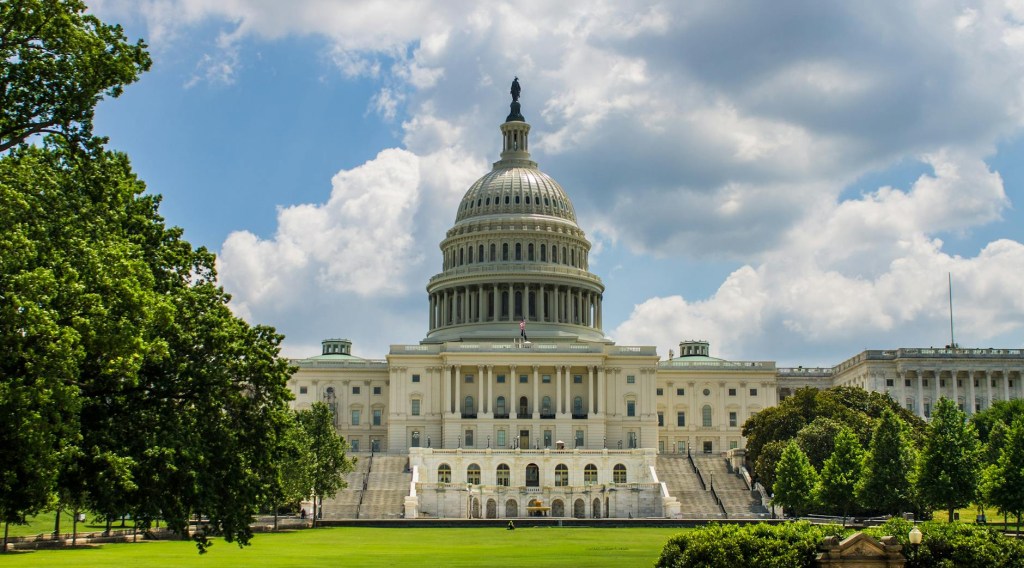
I became interested in politics at a young age, and started door knocking for Democratic U.S. Congressman Anthony Beilenson the summer I turned 14. Two years later, when I was able to drive, I secured an unpaid internship in the Congressman’s district office, working 2-3 days a week after school. I learned A LOT about constituent services and the inner workings of the legislative and executive branches. The next spring, I talked Congressman Beilenson into nominating me for an appointment to serve as a U.S. Congressional Page for the then Democratic majority in the 83rd Congress. The summer I turned 17, I had the honor of working on the floor of the House of Representatives in Washington, D.C. That experience changed my life and gave me an early perspective on politics and power in the real world.
I certainly considered a career in politics, but I choose to pursue a different career path. Nonetheless, my political views have changed little since my teen years. Here’s a brief overview of my core political beliefs:
- I believe that we are a nation of immigrants, and better for it.
- I believe that a rising tide raises all boats.
- I believe that under the social contract we have a duty to support those that are struggling.
- I believe there is societal value to having diversity in groups, the inclusion of others, and equity in our institutions [I will address these terms, and others, in an upcoming post].
- I believe that actions of hate and willful prejudice should be forcefully rejected.
- I believe we have an obligation to pay taxes to run our governmental bodies (local, regional, state, and federal) and to provide for the common good (correspondingly, I was taught to not complain about paying taxes, because that means you have a good job, which is a lot better than the alternative!)
That said, I also believe that as part of the human condition we are frail, imperfect, naturally fearful, terrifyingly tribal, and generally resistant to consequential change. All of this, and much more, leads to our current state of local, domestic, and international politics.
Other Views and Biases
Like every human, I am subject to cognitive bias that impact my assessment of the world around me and how I make decisions and take action in my life. That said, having extensively studied common cognitive biases, I try to be self-reflective and to recognize and control for those biases — sometimes successfully, sometimes not.
At my core, I see myself as a pragmatist with a fundamental belief in the scientific process and evidence-based decision-making. We cannot survive if we keep jumping from one unproven hypothesis to another without inquiry, testing, assessment, review, and validation.
Thus, when it comes to education — and many parts of my professional life, particularly when I serve as a testifying expert — I subscribe to the epistemology (philosophy of knowledge) of justification: is there a justified basis for a belief or opinion.
I believe we must distinguish between religious (blind) faith in an ideal (i.e., an unquestioned, accepted immutable truth) as opposed to belief formed in a falsifiable hypothesis that can be properly researched, tested, and validated using scientific processes (i.e., a belief that something that has not yet been proven false and thus may be true, but is mutable).
In sum, I am extremely concerned that parts of our society have expanded the principle of blind faith in ideals beyond the realm of religion and into places that, IMO, it does not belong, including politics and, more importantly for this blog, public education.
NOTE: I am certain there are other important biases or core views that I will want to disclose as I continue to produce this blog. As such, there will be addendums to this post at a later date.





 Hopkins 270 Blog
Leave a comment